Harry Fonseca
- angevine7
- Jan 28
- 2 min read
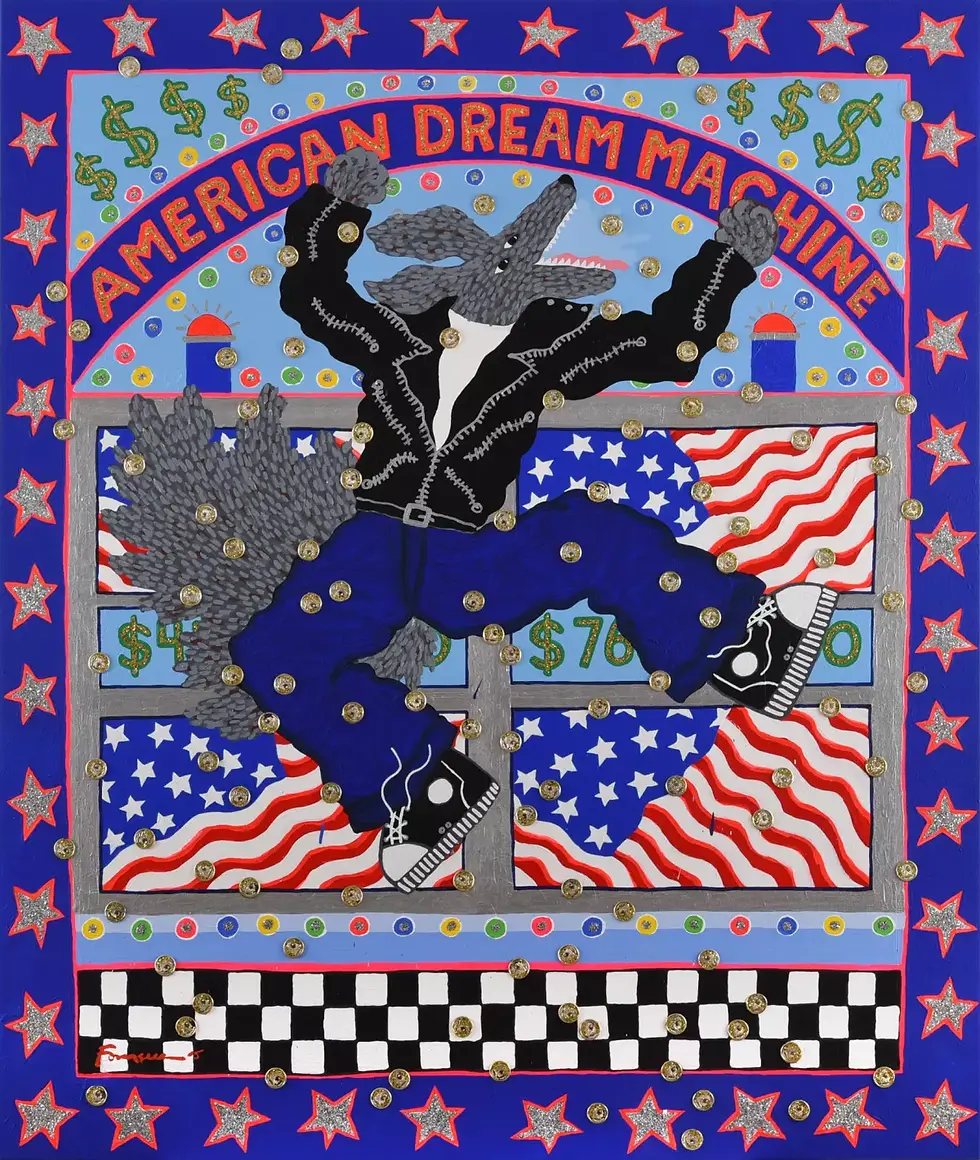
With his trademark blend of traditional imagery, contemporary experience, and vibrant color and form, Harry Fonseca created a body of work as varied as it is powerful. His works stretch our understanding of indigenous art and show us—if we need reminding—that the news from native California is good. Fonseca, who is of Nisenan Maidu, Hawaiian, and Portuguese heritage, began his art career in the 1960s at Cal State Sacramento. He was always inspired by the traditional arts of the Maidu people and has made many works inspired by the Maidu creation myth. In 2004, he interpreted the myth in an 18-foot-wide acrylic work for the National Museum of the American Indian at the Smithsonian.
But Fonseca’s works are rooted in personal as well as cultural history. In his best-known series, Coyote, the tricky shapeshifter of Native legend, goes “off-res” and hangs out in San Francisco in the 1970s, a decade of extraordinary artistic and personal experimentation. In the bright colors and stylized figuration that we also see in Funk artists of that time like Robert Arneson and Roy De Forest, Coyote, in leather jacket, platform sneakers, and earrings, tries on many roles. He appears as an opera singer, ballet dancer, koshare, and painter, often with an arm around another coyote. As an avatar for Fonseca, Coyote embodies traditional ways, the fortunes of the indigenous in the US, and contemporary queer life. In American Dream Machine, he makes ironic reference to Indian gaming. Those are real poker chips stuck on it.

Fonseca's work took a more political turn into two series devoted to the “physical, emotional and spiritual genocide of the native people of California”–-namely, the Mission system and the Gold Rush. During the summer of 1997, Fonseca created The Discovery of Gold in California, over 300 abstractions that show the gentle foothills fractured by the brutality of the Gold Rush. The browns, blues, and greens of the hillsides, flecked with the soil and plant life of today’s gold country, are finally overwhelmed by clouds of gold dust and particles.
Both landscape and history were especially close to Fonseca. His Maidu ancestors were indigenous to Coloma, the Nisenan village site on the American River where gold was discovered in 1848. He is also descended from Native Hawaiians brought to work the gold stake of John Sutter.
Fonseca died in 2006, in Albuquerque, New Mexico.


Comments