Franz Bischoff
Updated: Mar 23

After immigrating to the US in 1885, Vienna-trained ceramicist Franz Bischoff found the American dream. Moving from New York to Philadelphia to Detroit, where he established his own studio, Bischoff had such a flourishing career as a ceramicist and china decorator that he was known throughout the country as the king of the rose painters.
But apparently wanderlust was in his soul. He visited California in 1900 and was smitten by the beauty and drama of the landscape. He returned in 1906, stopping in San Francisco just days before the earthquake. Better luck awaited the king of the roses in Los Angeles, where he eventually turned his hand to painting the rich and varied landscape around him.
His landscapes capture the brilliant light and rugged topography of his new home on the Arroyo Seco, a wash that runs from the base of the San Gabriel Mountains in Pasadena to Los Angeles. In 1908, Bischoff built an extravagant Italian Renaissance-style mansion on the banks of the arroyo, with its own art gallery, skylit cathedral ceilings and oak floors covered with polar bear skins. His home had a tremendous view of the Arroyo and the graceful arches of its bridge, built in 1912.
Bischoff was unique among SoCal landscapists for depicting the region in all seasons and all weathers, including rainy and cloudy days. In this version, with the strong composition and balance of shapes and colors Bishoff was known for, we see a fall landscape, with rust-colored trees framing the bridge in the midground, the San Gabriel Mountains looming blue behind. Notice that the stream is a mere trickle, as would be typical before the winter rains. Today, the wash is a concrete flood control channel built in the 1930s under the auspices of the WPA (which also authorized some awesome mural painting in the area). Locals are trying to restore the arroyo to something like what Bischoff saw.
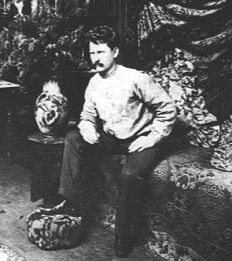
Bischoff did capitalize on his skill with roses, painting many still life and garden scenes. In early works like Arroyo Seco Bridge, he’s still relying on the muted palette and rounded contours that he used to depict flowers. He captured farms, fishing wharfs, coastal and desert landscapes and scenes of the Sierra Nevada in a style that became increasingly modern—contemporary critics said he flirted with Fauvism and Expressionism. But his paintings always displayed a reverence for nature, especially the wild contours of Los Angeles before the freeways came.


Comments